

As of June 2024, a new law means that all pet cats in the UK must be microchipped by the time they’re 20 weeks old. If you’re a cat owner and haven’t yet had your cat chipped, it’s now a legal requirement – and not complying could result in a fine of up to £500.
This move has caused quite a stir among many cat owners. But don’t worry, it’s not nearly as complicated (or scary) as it might sound. Here’s a rundown of what you need to know to stay on the right side of the law and more importantly, to keep your feline family members safe and sound.
What the Law Says

The updated regulations are part of the Government’s wider efforts to improve animal welfare and reduce the number of lost or stray cats that never make it back home. Under the new rules, if your cat is over 20 weeks of age and isn’t microchipped, you could be served with an enforcement notice. If you are, from that point, you’ll have 21 days to get your cat microchipped before facing a potential penalty.
This law applies to all pet cats in England, with some exceptions made for feral or free-roaming community cats, which are much harder to handle and typically not “owned” in the traditional sense.
IMPORTANT: Even if your cat lives entirely indoors and never ventures outside, they still must be microchipped under the new law. It’s a safeguard in case your cat ever escapes or gets lost.
It’s worth noting that this legislation brings cats in line with dogs, who have been subject to compulsory microchipping since 2016. It’s a natural progression that reflects how seriously we all must take our responsibilities as pet owners.
Why Microchipping Matters
Cats are naturally curious, independent creatures. Whether yours is a homebody who barely strays from the sofa or an adventurous soul who roams the neighbourhood like it’s their kingdom, there’s always a chance they could go missing. Gates get left open, windows get nudged ajar, and the call of a sunny garden or a fluttering bird can prove too tempting to resist.
Microchipping gives your cat a voice when they can’t speak for themselves. If they’re found injured or lost, a quick scan at the vet or by a rescue team can link them back to you. It’s a straightforward solution to a heartbreaking problem and with so many stories of lost cats being reunited thanks to a chip, it’s no wonder animal charities have been pushing for this for years.
Before this law was introduced, around 2.8 million cats in the UK weren’t microchipped. That’s a staggering number of pets with no clear way home if they ever disappeared. For those who’ve ever spent hours calling their cat’s name into the night, rattling food bowls in the hope of a jingle bell or a meow in the bushes, you’ll know how awful that uncertainty feels. A microchip can help turn that worry into a fantastic reunion.
How the Microchipping Process Works

The actual microchipping procedure is quick and relatively painless. The chip which is about the size of a grain of rice is implanted just under your cat’s skin, usually between the shoulder blades. It only takes a few seconds, and no anaesthetic is needed.
Most cats barely flinch. You might get a slightly indignant look afterwards (especially if you haven’t brought treats!), but the process is similar to a routine vaccination. Once done, your cat won’t even know it’s there. In our experience most cats sail through microchipping without any bother at all. Occasionally, you might notice a little swelling where the chip went in, but it usually sorts itself out within a few days. If anything doesn’t seem quite right, or if your cat seems a bit out of sorts, it’s always worth giving your vet a ring, better to be safe than sorry.
After the chip is inserted, your contact details are registered on a recognised database such as Petlog, Identibase or Animal Tracker. It’s this registration, and keeping it current, that turns the microchip from a bit of tech into a life-saving link between you and your cat.
Many vets will microchip your cat during another routine visit, like a spay/neuter appointment or annual vaccination. It’s quick, simple, and over before they’ve even realised you’ve handed them over.
How Much Does It Cost?
Microchipping is a relatively low-cost procedure, usually ranging from £15 to £45 depending on where you go. Most veterinary practices offer it, and many rescue centres or charities run free or discounted events throughout the year.
It’s a small price to pay for peace of mind especially when you consider how much we spend on toys, scratching posts, and the odd treat or three/four/five/six!! (Yes, we see that stash of Dreamies… and the emergency stash too)
What Happens If You Don’t Comply?

If your cat isn’t microchipped by the time they hit 20 weeks and you’re found to be in breach of the law, you’ll receive a formal notice giving you 21 days to get it sorted. Ignore that, and you could be fined up to £500.
Now, before you start imagining the ‘microchip police’ knocking on your door with a scanner in hand, don’t worry, that’s not going to happen. As far as we know, no one’s going door-to-door checking cats! And we certainly aren’t going to report you if your cat isn’t chipped. It’s really about doing the right thing for your cat’s safety and giving them the best chance of finding their way back home to you if they ever go missing.
Where it matters is if your lost cat is found by a vet, a rescue centre, or your local council. They’ll check for a chip and if there isn’t one, that’s when problems can arise.
The law isn’t there to catch people out it’s there to help protect cats and give owners peace of mind. We all hope our pets never go missing, but life happens. Microchipping is one of the simplest and most important ways to protect your cat, and yourself, from the heartbreak of not knowing where they are.
Don’t Forget to Update Your Details
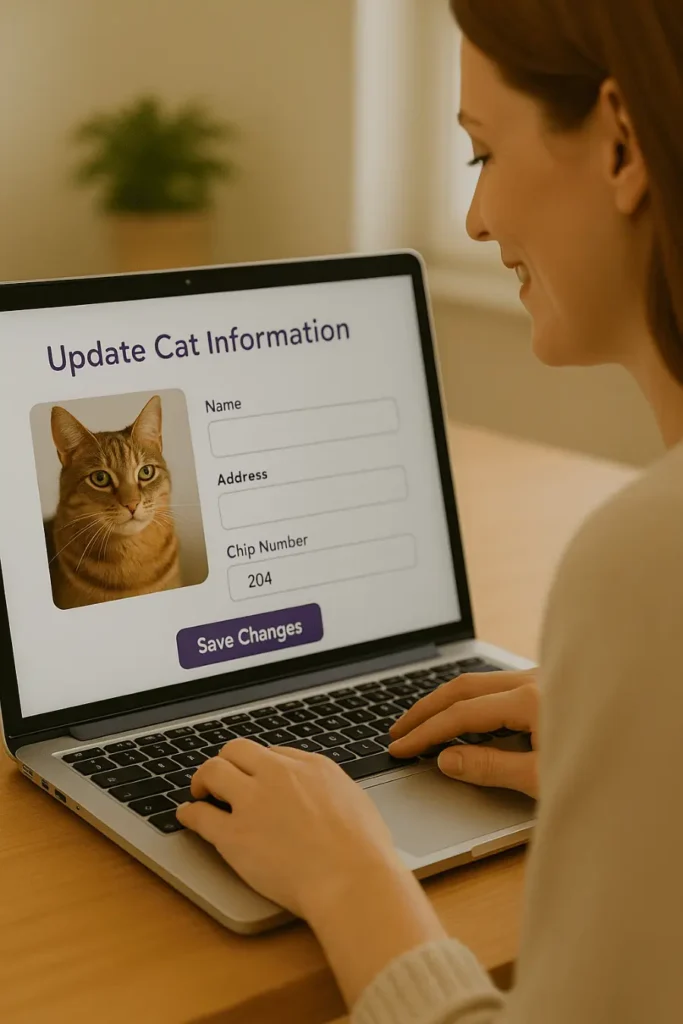
A microchip is only as effective as the information attached to it. If your contact details aren’t kept up to date, the chip won’t help much if your cat goes missing. That’s why it’s so important to let your microchip database provider know if you change your phone number, move house, or update your email address.
It only takes a few minutes to log in and make changes, but it could be the difference between a quick reunion and never seeing your pet again. In fact, out-of-date contact details are one of the most common reasons cats can’t be returned to their families despite being chipped.
If you’re not sure which database your cat is registered with, your vet can help, or you can check using the chip number (which your vet can scan). It’s well worth making a note of this number in your cat’s vet records or pet insurance paperwork maybe even pop it on the fridge next to the emergency tuna supply.
After Microchipping: What If My Cat Acts a Bit Odd?
Most cats bounce back from microchipping without a fuss. But it’s perfectly normal for some to seem a little out of sorts for a day or two. If your cat is suddenly off their food or behaving a bit strangely after being chipped, try not to worry.
They might just be feeling a bit put out from the trip to the vet or the sensation of the chip settling in. Some cats can be dramatic souls and take any vet visit as a personal insult! A little extra fuss, a quiet place to rest, and keeping an eye on them is usually all that’s needed.
If your cat still isn’t eating after 24 hours, or if something really doesn’t feel right, give your vet a quick call for reassurance. But in most cases, a day of sulking followed by a treat or two does the trick.
Final Furballs Thoughts
The new law isn’t just about ticking a box it’s about protecting cats and giving owners peace of mind. Whether your cat’s a pampered house cat or a seasoned garden explorer, being microchipped can make all the difference if they go missing.
At Furballs Cattery, we welcome this change as another step forward in safeguarding the cats we all love. We see first-hand how much care and affection our clients give their cats, and we know how devastating it would be if one went missing without a way to get home.
Microchipping might not be the most glamorous part of pet ownership, but it’s one of the most important. It’s quick, affordable, and now legally essential. If you’re unsure whether your cat is microchipped, or want to double-check that the details are still current, speak to your vet it’s a small action that makes a big impact.
After all, our cats depend on us for so much food, fuss, warm laps and now, the legal responsibility to give them a permanent way home too.
Microchipping gives your cat the best chance of finding their way home if they ever get lost and it’s now an essential part of responsible ownership. At Furballs Cattery in Hampshire, we’ve been keeping cats safe and secure for over 30 years. As a family-run, 5-star licensed cattery, your cat’s wellbeing is always our top priority.
Learn more about how we care for every cat at Furballs Cattery.


