

Bringing a kitten home is an exciting time, but it can also feel a little daunting if you’re not sure where to start. Whether your new feline friend is eight weeks old or a little older, giving them the right care from the beginning sets the foundation for a happy, healthy life. This guide is filled with practical, reassuring advice to help your kitten thrive. From food and litter trays to vet visits and behaviour tips to help you get off to a confident start.
Feeding Your Kitten: Nutrition for Growing Cats
Kittens grow rapidly in their first year, and their nutritional needs are very different from those of adult cats. To support healthy growth, energy levels, and development, it’s important to feed them the right food in the right way. While it can be tempting to reach for cheaper, supermarket-branded foods to keep costs down, these sometimes are a bit short on the quality protein and essential nutrients that kittens need. We always recommend feeding a quality, vet-approved brand. Yes, it might cost a little more upfront, but it really does pay dividends for your cat’s long-term health and wellbeing.
It often puzzles us when a new owner brings in a beautiful pedigree kitten who’s cost hundreds of pounds, sometimes even thousands, only to discover they’re feeding it one of the lowest-quality foods available. Investing in good nutrition from the start is one of the best things you can do to support your kitten’s growth, immune system, and development. Their little bodies are doing a lot of growing, and they deserve the best foundation you can give them. While it can be tempting to reach for the cheaper foods to keep costs down, these often lack the quality protein and essential nutrients that kittens need to really thrive. We always recommend feeding a quality, vet-approved brand.
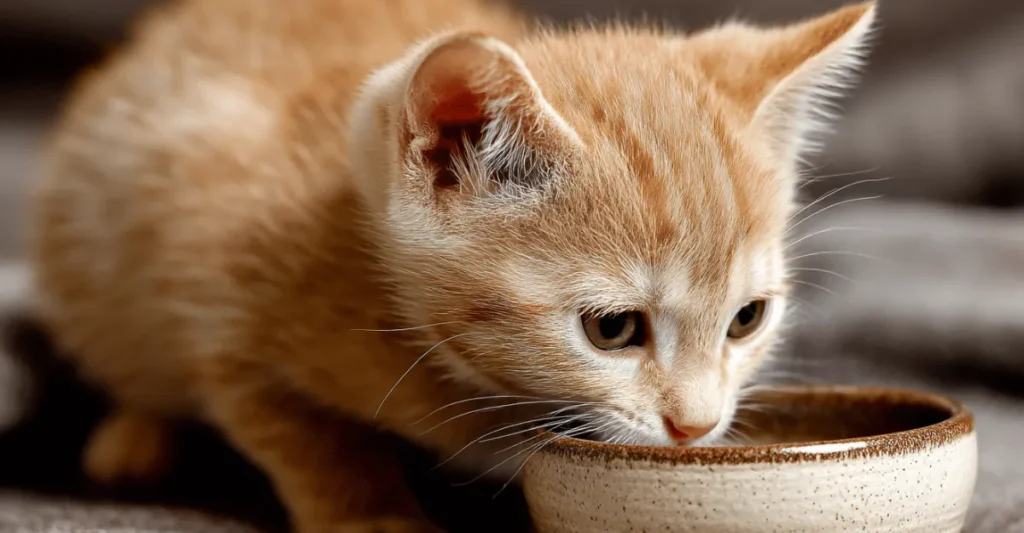
- Choose the right food: Always opt for high-quality kitten food that is clearly labelled as such. These formulas contain the extra protein, fats, vitamins, and minerals that growing kittens need. Wet food is often easier to eat and helps with hydration, while dry food can be useful for dental health.
- Avoid human food: Don’t be tempted to offer scraps or treats from your plate. Many common ingredients such as onions, garlic, chocolate, and certain dairy products can be harmful to cats.
- Feeding schedule:
- 8–12 weeks old: Four small meals per day
- 3–6 months old: Reduce to three meals per day
- 6 months and up: Two meals per day is typically sufficient
Kittens have small stomachs and fast metabolisms, so they do best with regular feeding. Avoid feeding cow’s milk, as most cats are lactose intolerant and it can lead to upset stomachs.
Tip: Always provide fresh, clean water. A cat water fountain can encourage drinking, which is great for kidney health later in life. Monitor your kitten’s appetite and bowel movements, as sudden changes could indicate a health concern.
Litter Tray Training: Clean Habits from the Start
Most kittens arrive already partially litter trained, especially if they’ve been raised in a home or a good breeder environment. Even so, it’s worth knowing how to support good habits:
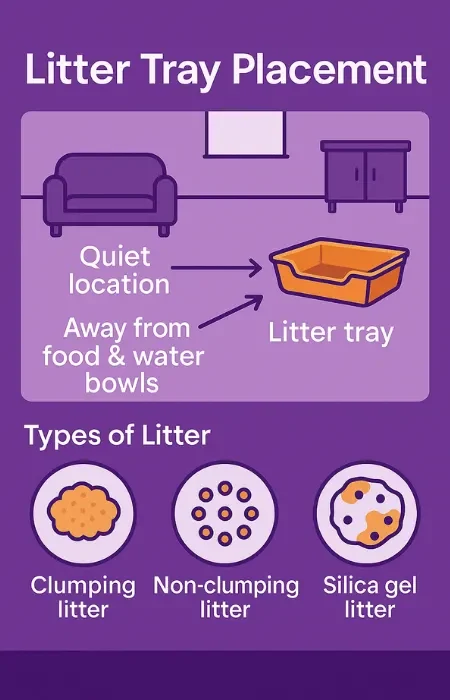
- Litter type: For younger kittens, use non-clumping, unscented litter – it’s safer in case they ingest any. Some kittens have preferences, so you may need to experiment.
- Location matters: Place the litter tray in a quiet, easily accessible location. Avoid busy hallways or noisy areas. Never put the tray too close to food or water bowls.
- Cleanliness is key: Scoop out solids as soon as possible and change the litter regularly. Cats are clean animals and may avoid a dirty tray so leading to soiling elsewhere in your home. Something that you definitely want to avoid!
- Number of trays: Ideally, provide one litter tray per cat, plus one extra. If you live in a multi-level home, consider placing a tray on each floor.
Encourage your kitten by gently placing them in the tray after meals and when they wake up. Praise them when they use it successfully. Never punish them for accidents – calm consistency is more effective.
Some kittens may experience the occasional accident, especially in new environments. If this happens, clean the area thoroughly to remove odours and gently guide your kitten back to their tray. Remember just as much as it is a learning curve for you it is also a rather large one for your kitten!
Vaccinations, Worming & Flea Control (UK)
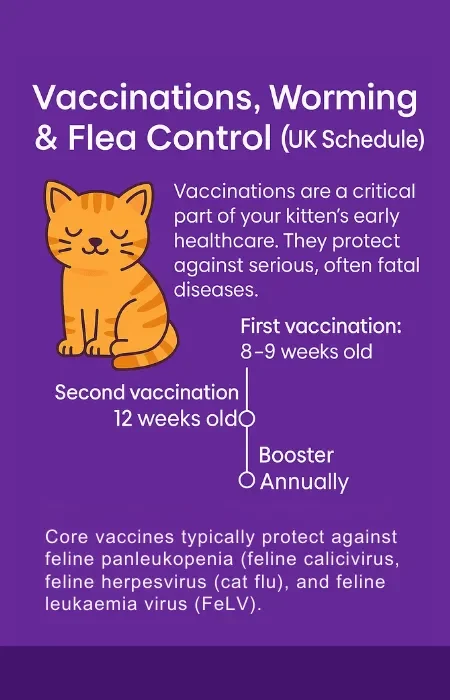
Vaccinations are a critical part of your kitten’s early healthcare. They protect against serious, often fatal diseases. In the UK, the usual schedule includes:
First vaccination: 8–9 weeks old
Second vaccination: 12 weeks old
Booster: Annually
Core vaccines typically protect against feline panleukopenia (feline enteritis), feline calicivirus, feline herpesvirus (cat flu), and feline leukaemia virus (FeLV).
It’s really important to understand that these vaccines are not a ‘one and done’ situation. Your kitten will need a booster every single year to maintain their protection, and without an up-to-date vaccination certificate, no licensed cattery in the UK (including ours) can legally accept your cat for boarding. That’s the regulation, I’m afraid!
We’ve seen a growing number of new cat owners who believe that once the kitten has had their initial vaccinations, that’s it for life. Sadly, that misunderstanding can lead to problems down the line, especially if you’re planning a holiday and need cattery care. We’ve had to disappoint quite a few owners recently because their cat’s vaccinations had lapsed.
And if you miss that annual booster window? Unfortunately, the full vaccination course (both the first and second injections) will need to be restarted from scratch. It’s easily overlooked during a busy year, but it’s worth setting a reminder in your calendar or phone to ensure you stay on top of it.
Worming Schedule:
- Begin at 3 weeks old
- Repeat every 2 weeks until 12 weeks
- Then monthly until six months
- After six months, worm every 3 months as part of routine care
Flea Prevention: Even indoor cats can pick up fleas from visitors, other pets, or used furniture. Your vet can recommend a safe and effective flea prevention treatment suitable for kittens. Avoid over-the-counter products not designed for kittens, as they can be harmful.
Other health considerations include treating for ear mites and checking for signs of tummy upsets or respiratory infections. Keep an eye out for symptoms such as sneezing, coughing, swollen eyes, or diarrhoea.
Note: Always consult your vet before starting any treatment. What works for an adult cat might not be safe for a kitten.
Neutering and Microchipping: Responsible Pet Ownership
Neutering (spaying or castrating) is a routine and important procedure for kittens. Most vets recommend doing this around 4 to 6 months of age. Benefits include:
- Preventing unwanted litters
- Reducing spraying and other marking behaviours
- Lowering the risk of certain cancers and infections
- Calmer behaviour as they mature
From June 2024, microchipping is a legal requirement in the UK for all cats over 20 weeks old. It’s a simple and quick procedure, providing permanent identification in case your kitten goes missing. Make sure your contact details are always up to date on the microchip registry.
Some owners also opt for pet insurance at this stage. It can help with unexpected vet bills and give peace of mind, especially during your kitten’s adventurous first year. Not all policies offer the same level of cover or benefits, so it’s worth taking the time to do a bit of research. Think about what’s important to you – whether that’s cover for illness, injury, dental care, or boarding costs if you’re unwell. Like car insurance, there are plenty of comparison sites available that can help you compare options and guide you towards a policy that suits your needs and budget. A little time spent now could save a lot of heartache (and money) later on.
Socialisation and Play: Setting Up for Success
Early experiences shape your kitten’s personality. Gentle, positive interactions help build confidence and reduce fearfulness later in life. This socialisation period is especially important in the first few months of life, when kittens are most receptive to learning about the world around them.
- Introduce new experiences gradually: Different people, sounds, textures, and routines. Invite friends over for short visits and let your kitten explore at their own pace. Vacuum cleaners, kettles, and even the postie at the door can all be useful parts of their early education.
- Play with purpose: Use wand toys, feather teasers, and small balls to mimic hunting behaviour. Never use hands or fingers for play, as this encourages biting and scratching that can become a problem later.
- Discourage rough behaviour: If your kitten bites or scratches during play, stop the session calmly and immediately. Offer a toy instead to redirect energy and teach what is and isn’t acceptable.
- Provide enrichment: Cat trees, cardboard boxes, puzzle feeders, and scratching posts are great outlets for curiosity and energy. Rotate toys to keep things interesting.
- Handling practice: Get them used to being gently touched on their paws, ears, and mouth – this will make future grooming and vet visits far less stressful.
If you have young children in the home, it’s crucial to set clear boundaries. A kitten is not a toy, and equally, a young child is not a toy for the kitten. Teach children how to approach, stroke, and play gently with the kitten, and always supervise interactions to make sure both parties are safe and happy. Encourage quiet voices and calm behaviour, and explain that kittens need their space, especially when sleeping or eating.

Socialising with other animals, if done properly, can also be beneficial. Introduce other pets slowly and supervise all interactions. Kittens learn quickly through observation, repetition, and positive reinforcement. A confident, well-socialised kitten will be far more resilient and adaptable in adulthood.
Daily play sessions are essential, especially for indoor kittens. They help prevent boredom, encourage exercise, and strengthen your bond. Remember, the effort you put into positive early socialisation now will set the tone for a relaxed and friendly adult cat in the future.
Creating a Safe and Comfortable Environment
Kittens are curious, and your home is a brand-new jungle to explore. Preparing your home for their arrival not only keeps them safe, but also helps them feel secure and relaxed as they settle into their new surroundings.
- Remove hazards: Tidy away electrical cords, string, small objects, and any items that could be swallowed or cause choking. Be especially cautious with houseplants – some, like lilies, poinsettias, and philodendrons, are toxic to cats.
- Secure cupboards and bins: Use child locks or latches where needed to prevent your kitten from getting into food, cleaning products, or medicines.
- Offer safe spaces: Create quiet areas where your kitten can retreat and relax, especially in the early days. A soft bed in a quiet corner, a cardboard box with a blanket, or a covered hideaway can give them the comfort and security they need.
- Use pheromone diffusers: Products like Feliway can help reduce anxiety and ease the transition into a new environment. They mimic natural feline pheromones that promote calm and relaxation.
- Hide wires and fragile items: Kittens love to explore with their mouths and paws. Secure cables with covers and move anything fragile or valuable out of reach until they grow out of their clumsy phase.
- Secure windows and balconies: If your kitten will be an indoor cat, ensure that open windows are fitted with screens or restrictors. Balconies should be fully enclosed to prevent dangerous falls.
- Avoid loud noises and overwhelming environments: Introduce your kitten to household sounds gradually. Keep the environment as calm as possible in the first few days to avoid sensory overload.

Think of your home from a kitten’s perspective. Everything is new, exciting, and potentially a toy! Supervise their early adventures and gently steer them away from things they shouldn’t be investigating. A consistent daily routine also plays a big role in helping kittens feel safe. Set regular times for feeding, play, and rest to give structure to their day.
You can also enrich their environment with climbing posts, tunnels, and interactive toys to keep their mind and body active. Cats naturally enjoy observing from up high, so providing access to a window perch or cat tree can be especially rewarding for them.
Gradually introduce them to new areas of the home, and supervise interactions with children or other pets. Consistency in their daily routine helps them feel safe and settled, and lays the foundation for a confident, happy adult cat.
When to Visit the Vet
Choosing and registering with a local vet is one of the first things you should do once you know a kitten is joining your family. Don’t leave it until the last minute, as some veterinary practices may not be taking on new clients. You might need to ring around a few in your area to find one with availability, so it’s worth doing this ahead of time. A good vet will not only care for your kitten when they’re poorly but will also be your trusted guide throughout their life.

In addition to vaccinations and worming, you should book a vet visit:
- As soon as you bring your kitten home, for a general health check and to register them properly
- If they show any signs of illness, such as vomiting, diarrhoea, sneezing, lack of appetite, or lethargy
- Before neutering or microchipping, to discuss timing and aftercare
- For advice on diet and weight, particularly during growth spurts
- If you notice behavioural changes, such as hiding, aggression, or over-grooming, which could signal discomfort or stress
Regular check-ups help detect any issues early, and your vet will be valuable in your kitten’s care. Ask questions and keep a notebook of any changes in behaviour, eating, or litter habits between visits. Don’t feel embarrassed about checking things you’re unsure of it’s always better to ask than to guess when it comes to your kitten’s health and wellbeing. Ask questions and keep a note of any changes in behaviour, eating, or litter habits between visits.
Final Furballs Thoughts
Learning how to care for a kitten isn’t about being perfect it’s about being attentive, consistent, and kind. With the right support and preparation, your kitten will grow into a confident and content companion. They’ll rely on you for love, guidance, and reassurance in those crucial early months.
Make time to observe your kitten’s individual personality and pace. Some are bold explorers, while others may take longer to settle. There’s no one-size-fits-all approach, but with patience and plenty of cuddles, your bond will blossom.
Welcoming a kitten into your life is such a special experience, and it’s worth taking the time to get those early days right. At Furballs Cattery, we’re a family-run, 5-star licensed cattery in Hampshire with over 30 years of cat care expertise so we know just how important a confident, content kitten is for long-term wellbeing.
Learn more about who we are and why cats love Furballs Cattery


