Official 5 STAR Local Hampshire Cattery

abby and white cat sitting beside a clean litter tray in a softly lit indoor space. Featured image for a guide on why cats stop using their litter tray, exploring causes such as medical issues, stress, and tray setup.

Why Has My Cat Stopped Using Its Litter Tray?

It’s one of the most frustrating things a cat owner can face – your cat suddenly refusing to use their litter tray. One day everything’s fine, and the next… well, let’s just say you’re finding surprises in places you definitely don’t want them. If your cat’s avoiding the litter tray, don’t worry it’s a common issue, and there’s usually a reason behind it.

Let’s explore the most common causes and, more importantly, how to fix the problem so both you and your cat can feel calm and clean again.


1. Medical Issues
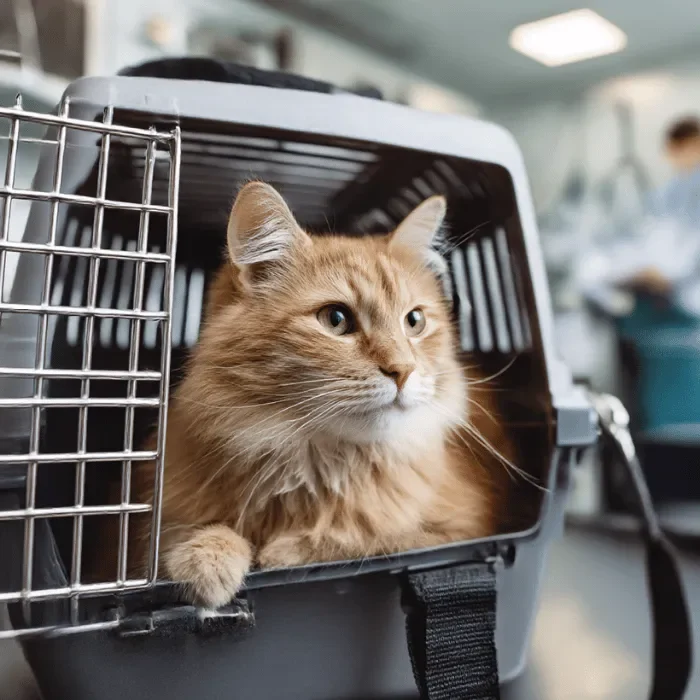
If your cat has suddenly stopped using the litter tray, the first thing to consider is their health. Issues such as urinary tract infections (UTIs), bladder inflammation (cystitis), kidney problems, or arthritis can make using the litter box uncomfortable or even painful. This is especially common in older cats or those with pre-existing conditions.

Cats are experts at hiding discomfort, so behavioural changes like avoiding the litter tray are often one of the first visible signs that something’s wrong.

What to do: Book a vet check-up straight away. Catching and treating health problems early can save your cat a lot of distress and your carpet too! If your cat is straining, crying out when trying to urinate, or passing blood, seek immediate veterinary attention.


2. Litter Tray Cleanliness

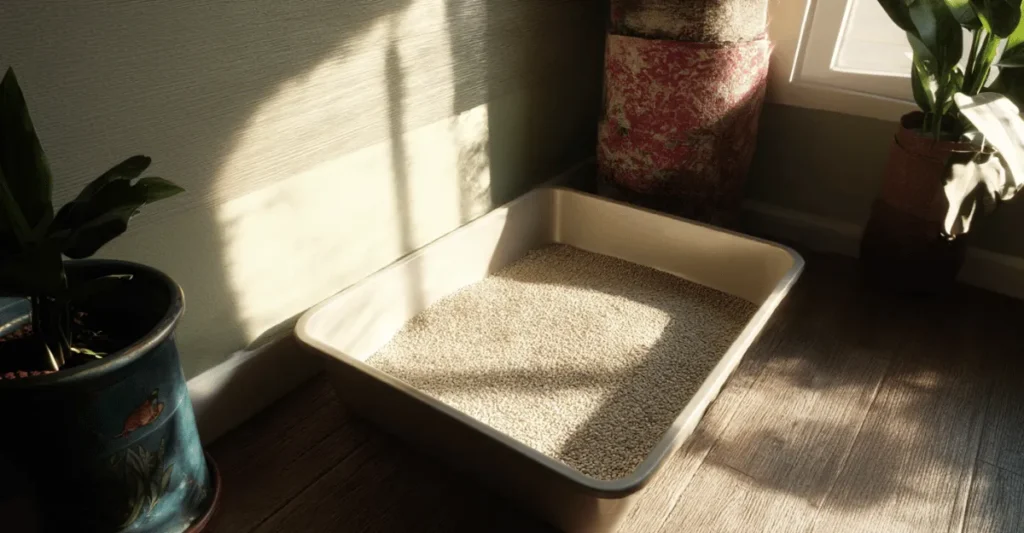
Cats are very clean creatures, and many won’t use a litter tray if it’s already been used, even once. A dirty tray can quickly lead to your cat looking for somewhere else to go.

What to do: Scoop at least once or twice a day and give the tray a thorough clean with warm water and a pet-safe cleaner at least once a week. Avoid heavily fragranced products as some cats find these off-putting. If you have more than one cat, each should have their own tray, plus one extra.
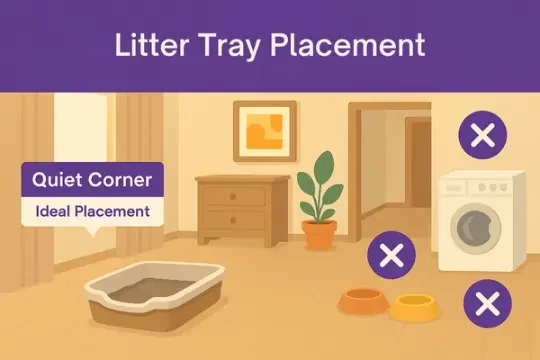
Infographic from Furballs Cattery showing ideal and poor litter tray placements in a home setting. A litter tray is correctly placed in a quiet corner near curtains, marked with a check symbol. Incorrect areas are marked with purple X symbols, including beside a washing machine, near food bowls, and in a busy doorway

3. Type of Litter

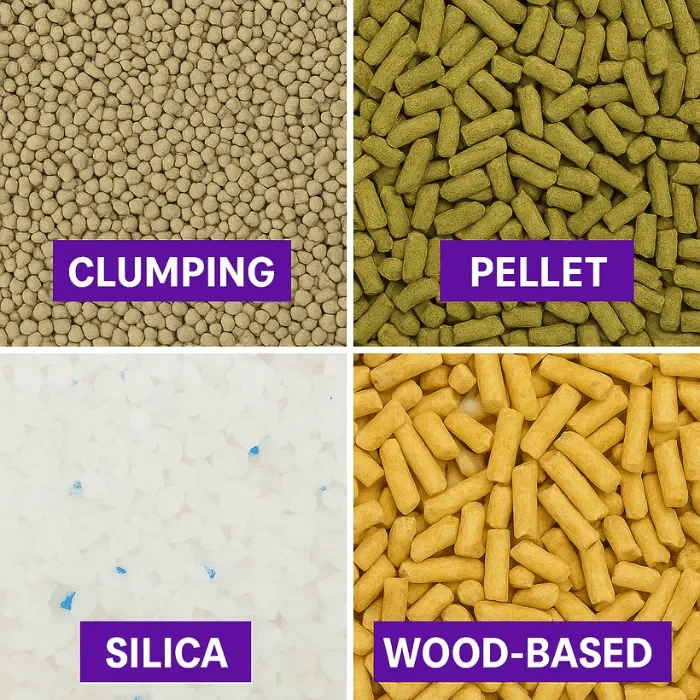
Some cats are very particular about the litter they’ll use. A sudden change in the texture, scent, or depth of the litter can put them off. For instance, some cats dislike scented litter or pellets that are too coarse underfoot.

What to do: If you’ve recently switched litter types, consider reverting to the old brand. If you need to change for medical or practical reasons, try a gradual mix-over, blending the new litter with the old one over a few days to a week.

4. Tray Placement

Litter tray location really matters. If it’s in a noisy, high-traffic area or too close to your cat’s food and water, they may avoid it. Cats need privacy and safety to feel relaxed enough to do their business, but then don’t we all!

What to do: Place the tray in a quiet, private space away from busy walkways, loud appliances, and food bowls. If your home is multi-storey, consider having a tray on each level. And remember: cats like routine. Try to avoid frequently moving the tray around. How would you like it if your toilet kept moving and and you had to go off searching for it everytime you need to, well you know what!


5. Stress or Anxiety

Cats are sensitive to their environment, and any disruption, a house move, visitors, a new baby or pet, loud building work, or even changes in your daily schedule can trigger stress. For some cats, that stress shows up in their litter tray department.

What to do: Try to identify any recent changes that could be affecting your cat. Offering hiding spots, sticking to predictable routines, and using calming pheromone diffusers like Feliway can all help reduce anxiety.
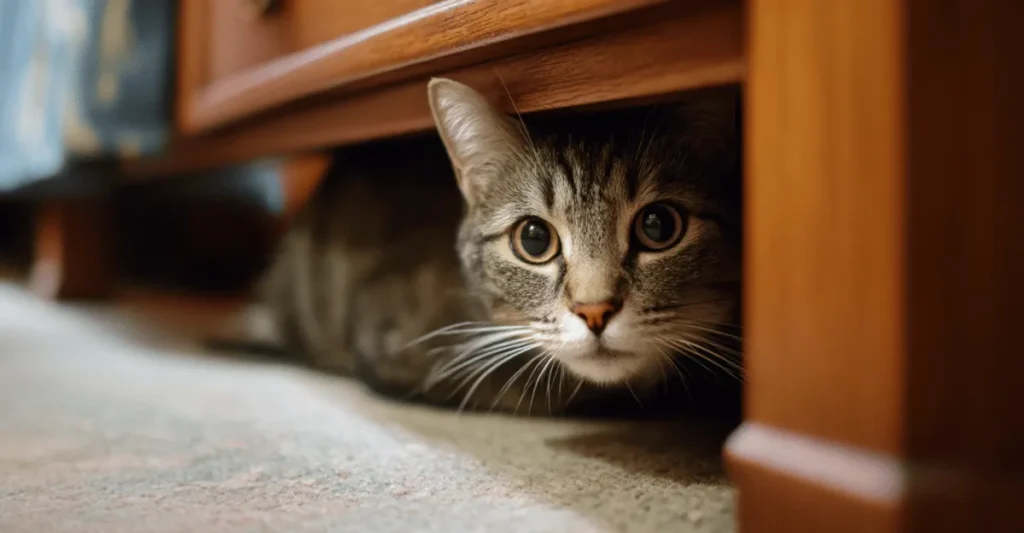

6. Bad Associations

If your cat experienced pain or fear while using the litter tray such as during a UTI they may now associate the tray itself with discomfort. As a result, they avoid it even after the issue has resolved.

What to do: Try offering a new tray in a different location with fresh litter. You could also experiment with a different style of tray, for example, switching from a covered to an open tray or vice versa. Breaking the negative association often takes time and patience, so don’t give up too quickly.


7. Ageing or Mobility Issues
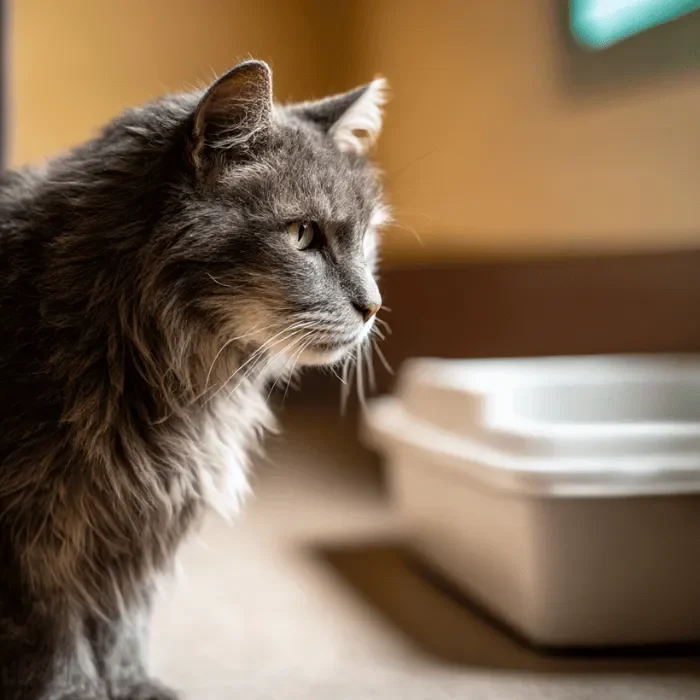
As cats age, they may develop arthritis or other joint issues that make climbing into a high-sided tray difficult. Vision or cognitive changes can also affect their toileting habits.

What to do: Choose a tray with low sides or a gentle ramp for easy access. Place it somewhere easy to reach and free from obstacles. For cats with dementia or confusion, keeping the tray in the same location and maintaining a consistent routine will help.


Final Furballs Thoughts

It’s never pleasant when your cat stops using their litter tray, but the good news is there’s almost always a reason, and usually a solution too. Start with a vet visit to rule out health issues, then consider the cleanliness, type, and placement of the tray, along with any recent changes in your cat’s world.

Understanding your cat’s needs and being patient as you make adjustments can make all the difference. Most cases are resolved with a bit of trial and error and a lot of patience.

Litter tray issues can be frustrating, but they’re often your cat’s way of telling you something’s not quite right. At Furballs Cattery in Hampshire, we’ve been caring for cats for over 30 years — so we’re well-versed in the quirks and signals that come with feline behaviour. Our purpose-built, 5-star licensed facilities are designed to keep cats calm, clean, and content.

Take a look at what makes our accomodation so reassuring for cats and their owners.


Disclaimer: This guide is for general advice only. Always speak to your vet if you’re concerned about your cat’s health or behaviour.

Share the Post:

What To read Next?

Contact

Need to chat about your cat’s holiday or visit to Furballs. Get in touch below

Directions from
Portsdown Hill

From the top of Portsdown Hill, head towards Wickham

At the roundabout at the bottom of the hill, Turn right, follow the signs to ‘Southwick’ and continue through the village.  You will pass ‘Golden Lion’ pub on your right and the village shop and post office on your left.

Follow the left bend into ‘West Street’ and continue along.  Then round the right hand bend at the bottom.  

Then take 2nd right into ‘Common Lane’.  Follow this lane all the way along until you reach the T-junction at the other end. 

Turn left then immediately left again onto the farm entrance.  This is Ashlands Farm. 

Follow the track through the centre of the farmyard, heading towards the big barn and creamy coloured house over to the right and through the double gates. 

If you get lost just call us below

Directions from Wickham

Head out of Wickham on  the B2177 Southwick Rd and continue along through North Boarhunt.  (Be aware that you enter into a 30mph speed limit, and quite often there are speed cameras in operation)

As you leave North Boarhunt, and the road opens up to just fields either side, you will see marker points, in yards, on your left indicating that you are approaching a crossroads ahead. 

Turn left at the crossroads marked ‘Denmead’ and ‘Horse & Jockey’ pub. 

Follow this lane around a series of bends, for approx half a mile, then at the top of the hill on the sharp left bend, you need to turn ‘right’ onto the farm entrance.  This is Ashlands Farm.  (If you see ‘Common Lane’ on your right,  you have missed the turning by literally only a few yards). 

Follow the track through the centre of the farmyard, heading towards the big barn and creamy coloured house over to the right and through the double gates. 

The journey is approx 3 miles in length and will take no more than 10 mins at the most from Wickham.

  If you get lost just call us below

Directions from M27
Leave the M27 at junction 11.Then take the Boarhunt exit, after a very short time turn right at T-junction. 

Once you have joined this section of road just stay on it and follow it all the way to the cross roads at the other end IGNORING any signs you see for Southwick.

At the cross roads go straight across signed 'Denmead' and 'Horse & Jockey'. 

Follow this lane around a series of bends, you will go past a farm on your left, then as the road opens up to fields either side of you, you will approach a sharp left bend.

On this bend turn right onto the farm entrance.  This is Ashlands Farm.  (If you see Common Lane on your right, you have missed the turning by literally a few yards!) 

Follow the track through the centre of the farmyard, heading towards the big barn and creamy coloured house over to the right and through the double gates. 

  If you get lost just call us below

Directions from Petersfield

Head out of Petersfield on the A3 towards Portsmouth.

After Queen Elizabeth Country Park, you take the next main junction marked ‘Clanfield, Hambledon’ 

Follow the road through Clanfield , going past the small parade of shops on your left and take the next right turn to Hambledon. (Hambledon Road).  

Stay on this road forever more until you get to and go through Hambledon village.  

You will go past Clark’s Village Store on the left and The Vine public house on the right. When you reach a T-junction  turn left and continue along, leaving the village (passing a traffic pinch point to slow vehicles down).  

You need to take the next right signed posted, ‘Worlds End, Southwick, Fareham’.  This is an even skinnier lane and you just stay on this lane for a couple of miles. 

Two landmarks to look out for – the ‘Chairmakers’ pub on your left, then a bit further on the ‘Horse&Jockey’ pub on your right.  

Keep going, over a hump backed bridge…………………… then round a sharp left hand bend……………….up the hill……………………..then as the road starts to level out you will see a left hand turn  into ‘Common Lane’ (signed Southwick, very narrow) DO NOT turn here, but literally a few yards after turn left onto the farm entrance.  (It’s on a sharp left bend)  This is Ashlands Farm.  

Follow the track through the centre of the farmyard, heading towards the big barn and creamy coloured house over to the right and through the double gates. 

The whole journey is cross country and should take you approx 20 minutes (or longer if you get stuck behind a tractor!).  It sounds a lot more complicated than it actually is!  If you get lost just call us below

Furballs Cattery

Prices effective 1st December 2022

PER DAY ARE INCLUSIVE of arrival and departure day

Booking subject to a £50.00 minimum fee. A 7 day minimum may apply during peak periods inc Easter, Summer, Christmas and New Year

Note: Due to the unprecedented rise in energy prices we have reluctantly had to introduce a supplementary charge to help cover these costs.
           Therefore one additional days boarding fee will be applied, this covers bookings up to 7 days. Bookings longer than 7 days will be charged pro rata